Loan processing involves multiple steps, from document collection to verification and approval.
When handled manually, these steps create delays, increase costs, and impact customer experience.
Loan processing automation uses AI to streamline workflows, reduce turnaround time, and improve efficiency across the lending lifecycle.
Key Bottlenecks in Loan Processing
Loan processing workflows often suffer from inefficiencies due to manual intervention at multiple stages.
These bottlenecks slow down approvals and create operational challenges.
Understanding these issues is essential to building an effective automation strategy.
Common bottlenecks include:
- Manual data entry slows down processing
- Document verification introduces delays
- Fragmented workflows create inefficiencies
What is Loan Processing Automation?
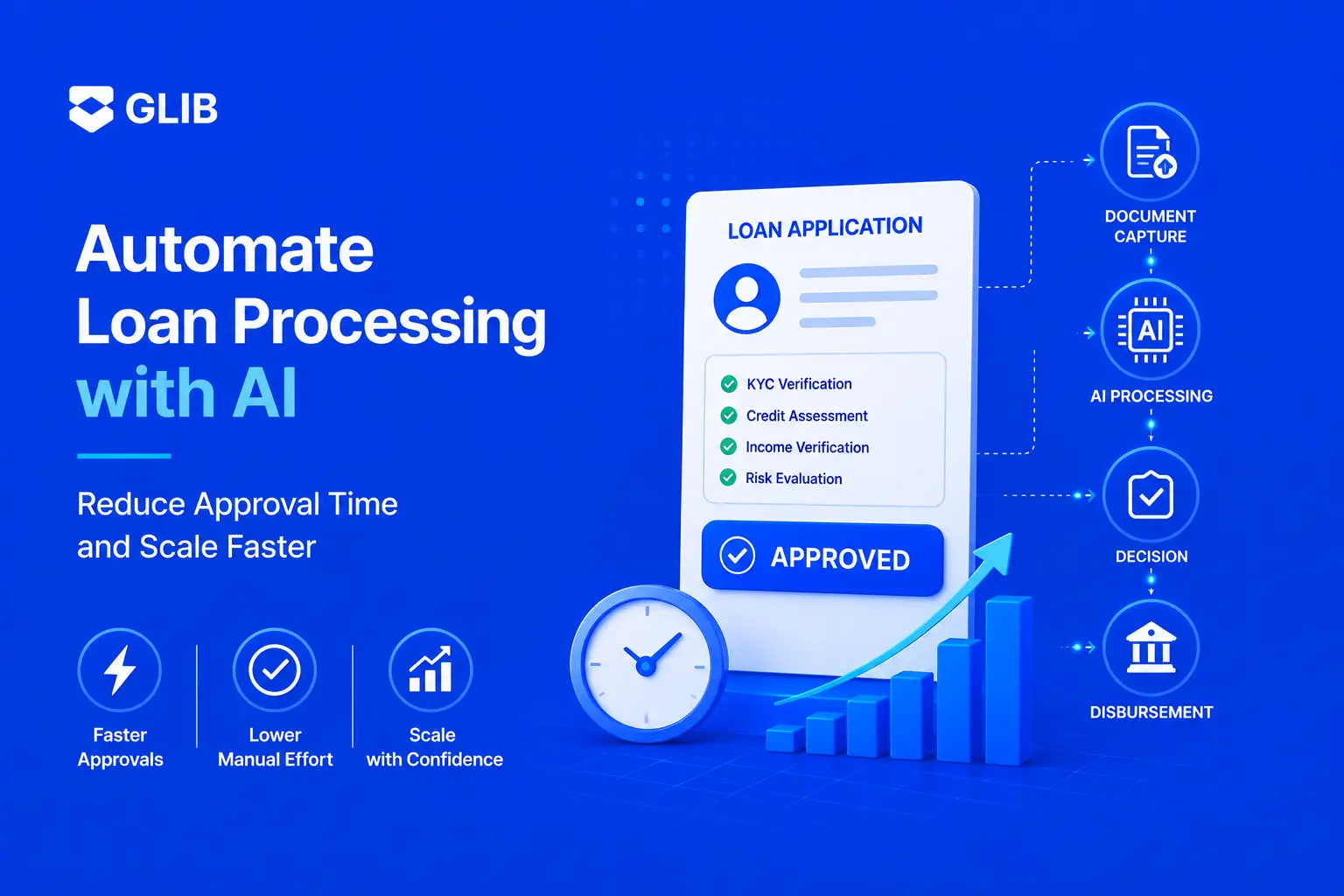
Loan processing automation involves using AI and workflow automation tools to digitize and streamline document-heavy processes.
It enables lenders to process applications faster while maintaining accuracy and consistency.
How It Works
Automation brings together all steps in the loan lifecycle into a unified system.
This eliminates redundancy and ensures faster processing.
The workflow typically includes:
- Document upload by applicants
- AI-based data extraction
- Automated validation of information
- Decision triggers through workflows
End-to-End Credit Underwriting Automation Workflow
Modern underwriting is no longer a fragmented, manual process.
AI enables a structured workflow that transforms raw financial data into actionable risk insights.
This workflow ensures consistency, speed, and scalability across lending operations.
Step 1: Data Collection & Aggregation
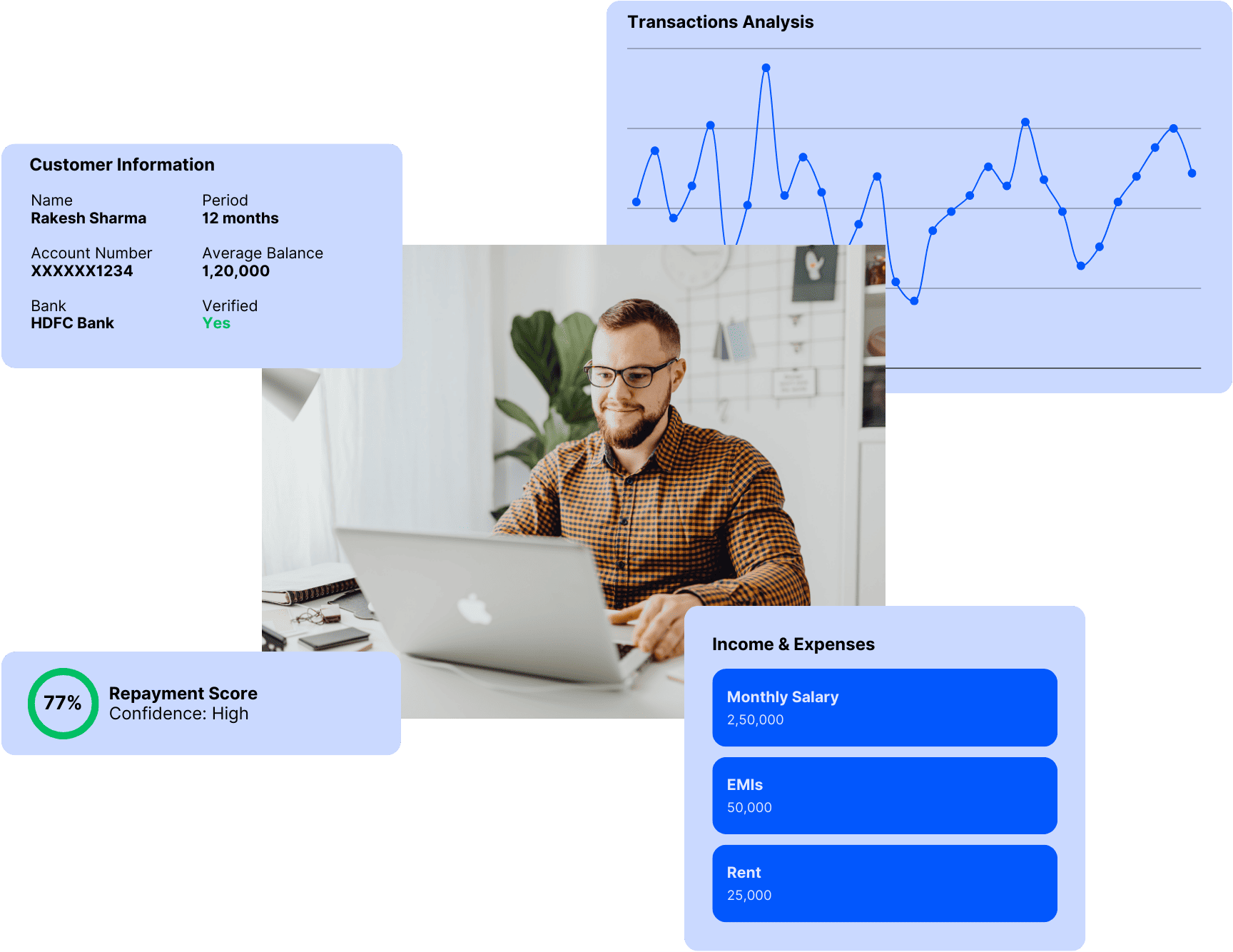
Financial documents such as bank statements, financial reports, and income proofs are collected and centralized.
Step 2: Data Extraction & Structuring
AI extracts and standardizes key financial data points including:
- Income streams
- Expenses
- Liabilities
- Cash flow trends
Step 3: Financial Analysis & Interpretation
The system evaluates:
- Income stability
- Spending patterns
- Debt obligations
- Cash flow health
Step 4: Risk Scoring & Insights Generation
AI models generate:
- Risk indicators
- Creditworthiness insights
- Decision support summaries
Step 5: Decision Integration
Insights are integrated into underwriting systems, enabling faster approvals with human oversight.
Benefits of Loan Processing Automation
Automation has a direct impact on operational efficiency and customer satisfaction.
It allows lenders to deliver faster and more reliable services.
Key benefits include:
- Faster processing and reduced turnaround time
- Lower operational costs
- Improved customer experience
Must Do and Must Not Do in Loan Processing Automation
Must Do
A well-designed automation strategy ensures efficiency and scalability.
Best practices include:
- Automate end-to-end workflows
- Prioritize data accuracy and validation
- Enable real-time processing
- Integrate across systems
Must Not Do
Avoiding common mistakes is crucial for success.
Common pitfalls include:
- Automating inefficient processes without redesign
- Ignoring user experience
- Depending heavily on manual review loops
- Overlooking scalability
How GLIB Helps with Loan Processing Automation
GLIB enables lenders to streamline loan processing by automating document-heavy workflows using AI.
Key Capabilities
- End-to-end document processing automation
- Workflow automation across loan stages
- Real-time financial data insights
- Scalable infrastructure for high volumes
Business Impact
GLIB helps reduce loan processing time significantly while improving accuracy and customer satisfaction.
Conclusion
Loan processing automation is essential for lenders aiming to improve efficiency and deliver faster approvals in a competitive market.
As customer expectations rise and lending volumes grow, automation becomes a critical capability rather than a nice-to-have feature.
AI-powered workflows help lenders:
- Scale operations efficiently
- Reduce turnaround time
- Improve underwriting consistency
- Deliver better borrower experiences
Frequently Asked Questions
What is loan processing automation?
Loan processing automation is the use of AI and workflow automation to streamline lending workflows and reduce manual effort across document-heavy processes.
How much time can automation save?
Loan processing time can typically be reduced by up to 70–80% through intelligent automation.
👉 Want to automate loan processing and accelerate approvals with AI?