Lending fraud rarely announces itself in a single transaction.
A large credit just before an application can be a genuine bonus. One cheque return can be a date mismatch. A cash deposit can be ordinary for a small business. Read alone, each is unremarkable.
Fraud often shows up as a combination of ordinary-looking events that only mean something together. Finding these patterns across thousands of transactions and multiple accounts is where automated analysis can help.
A Pattern Tells You More Than a Flag
Take a borrower who receives a large credit two weeks before applying.
On its own, the transaction proves nothing. Now add a sudden increase in monthly credits, transfers from another account in the borrower’s name, an EMI outflow that was not included in the application, and three recent cheque returns.
No single item is conclusive. Together, they give the lender a reason to investigate before sanction.
Manual review can miss these connections because analysts often review transactions one after another. Automated analysis can look across months and accounts, identify unusual patterns, and show the transactions behind each flag.
What Fraud Detection in Bank Statements Looks For
- Inflow spikes that break the account’s usual pattern, especially close to the application date
- Credits that do not match the borrower’s reported salary or business income
- Money moving between related accounts and returning, which can make cash flow look stronger
- Repeated cheque, NACH, or EMI failures
- Cash activity that differs from the borrower’s usual frequency, size, or timing
- Inconsistencies in balances, transaction sequences, or file structure that may indicate an altered statement
The Harder Kind Is First-Party Fraud
Forged or edited statements are one part of the problem. Document checks can often identify signs of tampering in balances, transaction sequences, or file structure.
First-party fraud is harder because the borrower and the statement may both be genuine. The issue is the financial behavior behind them.
Money may be moved into an account just before a loan application to make cash flow look stronger. Income may be routed through an account to look like regular salary. Existing loan payments may be made from another account and stay outside the picture presented to the lender.
Nothing in the document may be false. The risk comes from the pattern.
Data Is the Key in Fraud Risk Management
RBI’s new framework on Early Warning Signals and Red Flagging of Accounts highlights the value of using transaction data to identify unusual activity early and support investigations with clear evidence.
From Flag to Evidence
A fraud alert is useful only when the analyst can see why it was raised.
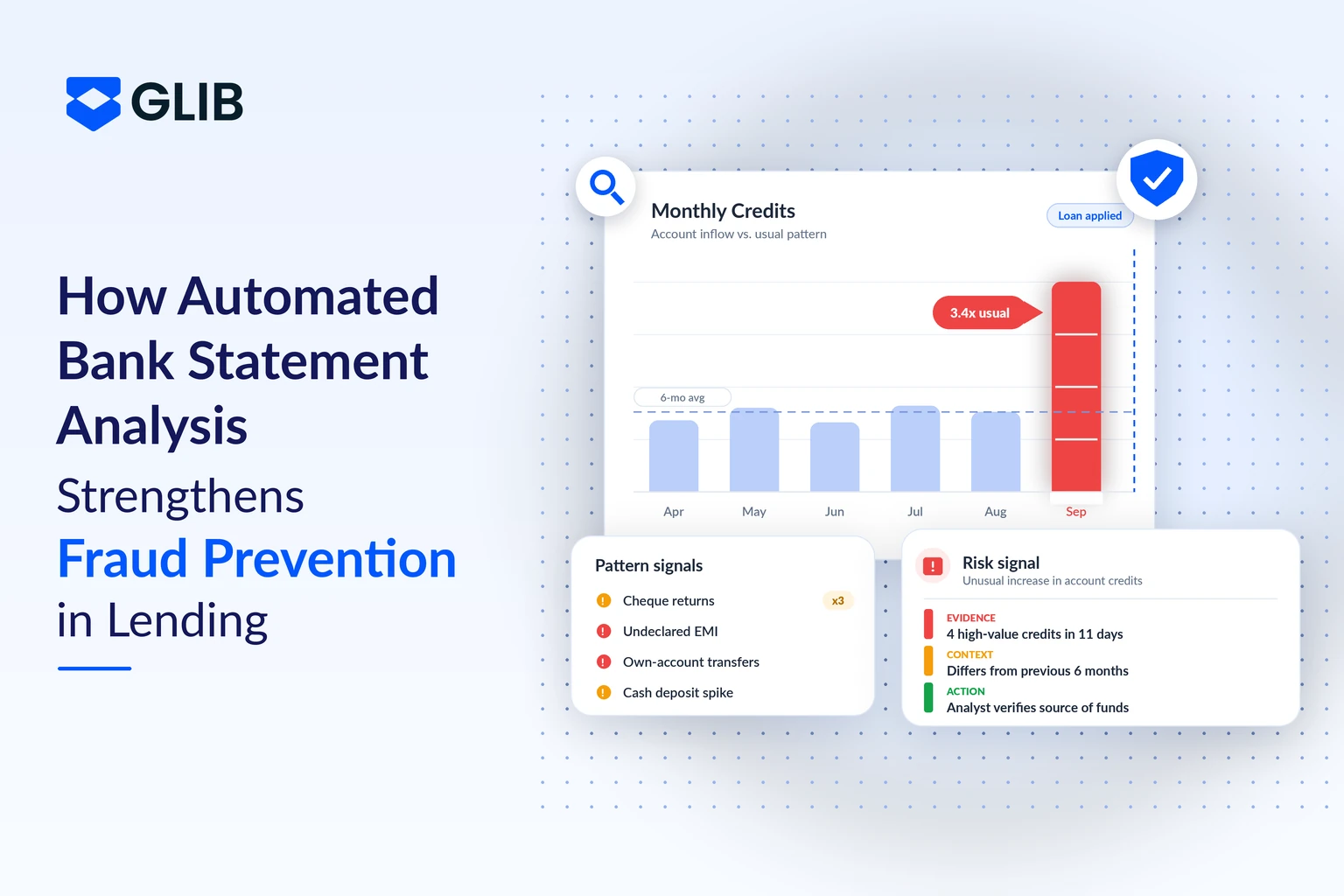
Risk signal: Unusual increase in account credits
Evidence: Four high-value credits within 11 days
Context: Activity differs from the previous six months
Action: Analyst verifies the source of funds
This connects the warning to the transactions behind it.
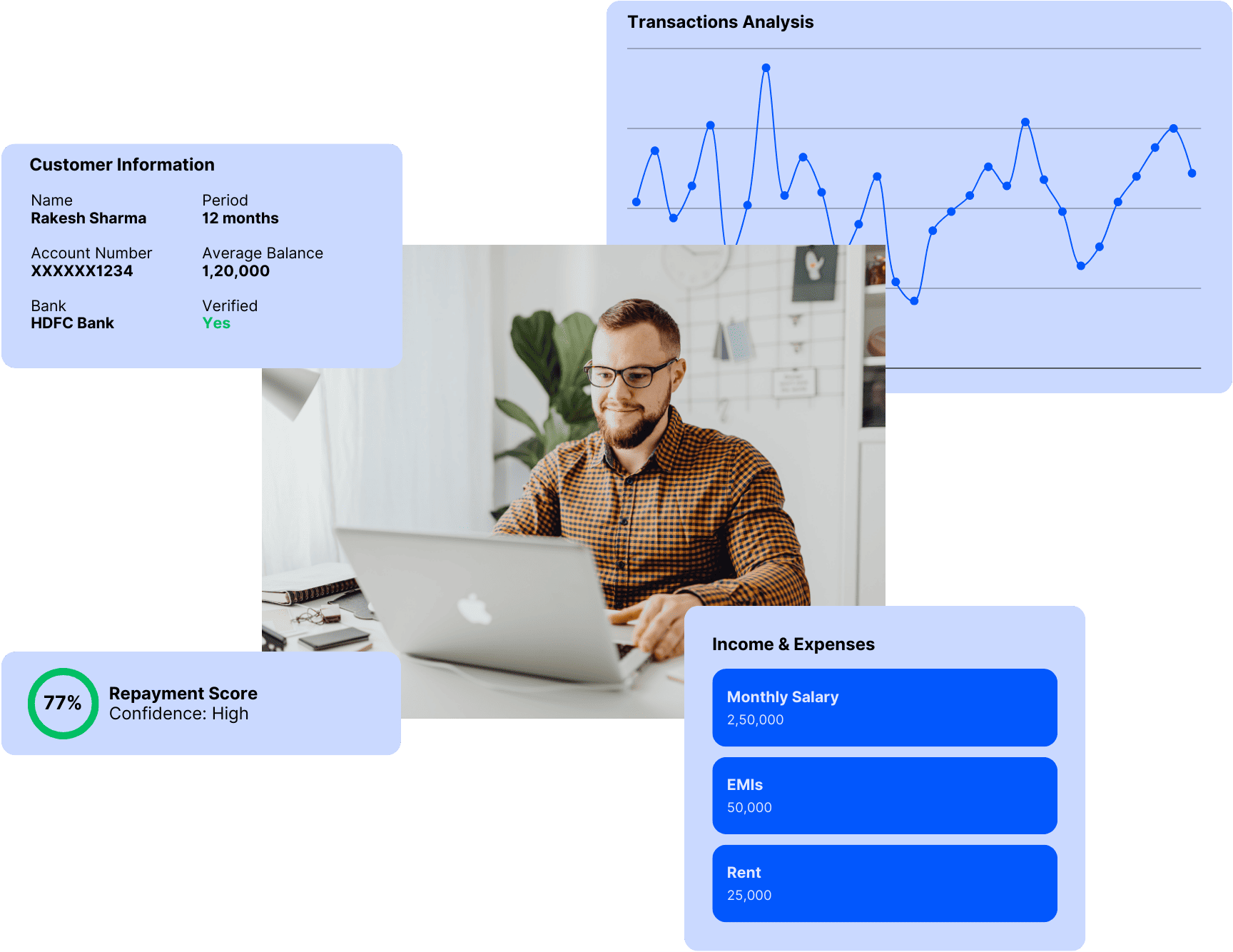
The same transaction data can also help with income verification, obligation detection, cash flow analysis, and checks against other borrower information. Within credit underwriting automation software, these checks can become part of the same workflow instead of separate manual exercises.
Credit memo automation software can then use the findings to support the credit narrative, while the analyst reviews the evidence and adds context.
GLIB Bank Statement Analyzer
GLIB’s Bank Statement Analyzer converts statements from different banks and formats into structured transaction data and analyzes activity across multiple accounts.
It is able to identify problems like altered documents, unusual deposits of income, and bounced cheques. Moreover, it can be used to verify income, analyse spending, and compare the statement with reports from the bureau, payslips, ITR, and GST returns.
Each flag can be reviewed with the underlying transactions, giving credit teams the evidence they need to investigate.
The Point Is Earlier Evidence
Automated analysis does not decide whether a borrower is fraudulent. It helps credit teams spot patterns that need a closer look while there is still time to investigate.
For lenders, the value is a clearer view of the borrower’s financial behavior and the evidence behind each risk signal.
Want to see how automated fraud detection fits into your underwriting workflow?
Book a demo today.