For decades, financial statements have been the backbone of credit decisioning.
Balance sheets, profit & loss statements, ratios - they’ve been treated as the most reliable indicators of a business’s health. And to be fair, they do serve an important purpose. They tell you what has happened.
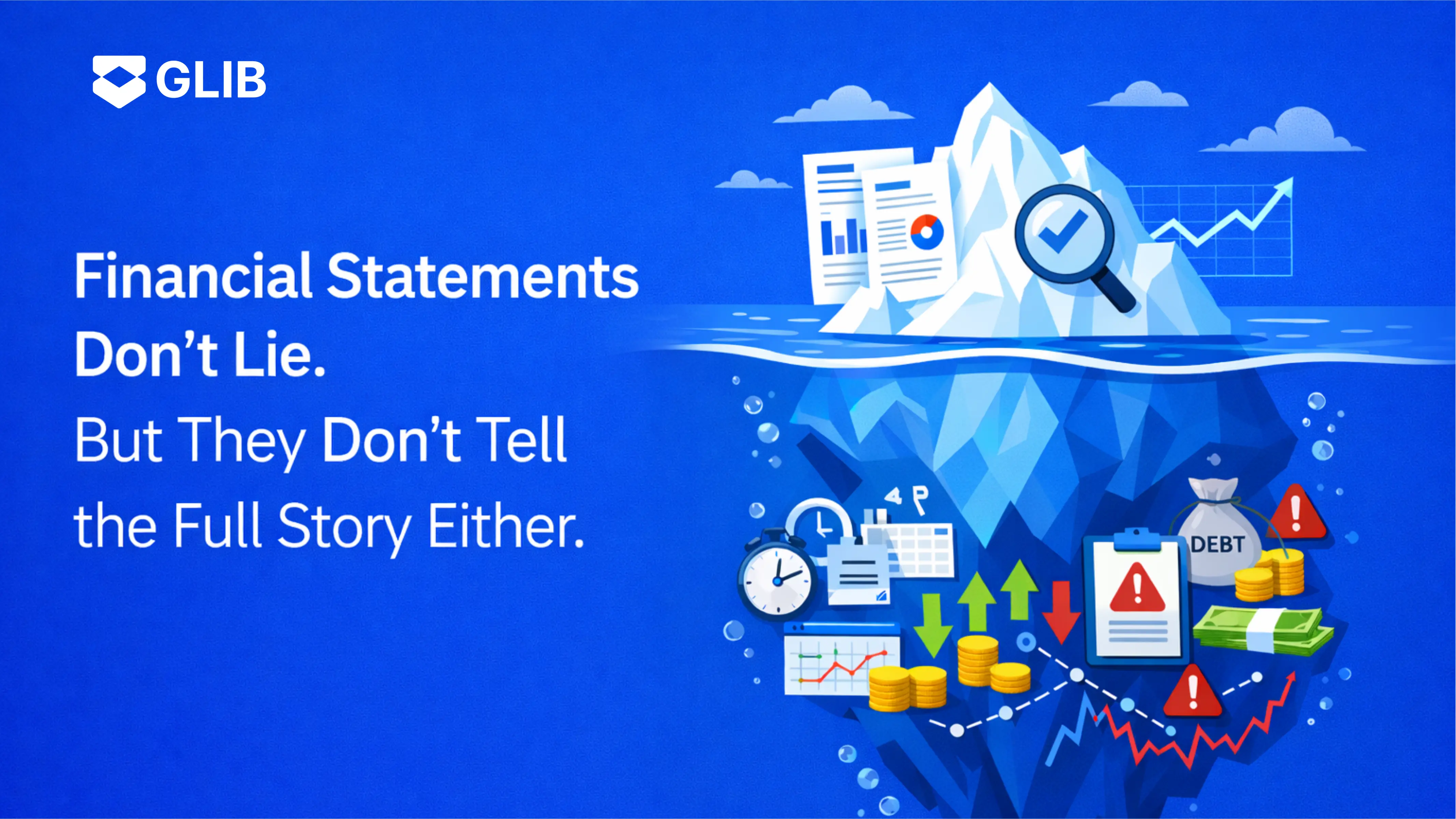
But here’s the problem: credit decisions are not about the past - they’re about the future. And that’s where traditional financial analysis starts to fall short.
The Illusion of Completeness
On paper, a business can look perfectly healthy. Strong revenues. Positive margins. Clean balance sheet. Yet, in reality, the same business might be struggling to meet its day-to-day obligations.
Why does this happen?
Because financial statements, by design, simplify reality. They compress months of business activity into standardized formats. In doing so, they often hide the nuances that matter for credit risk. Let’s break that down.
What Financial Statements Miss
There are four critical gaps that rarely get enough attention:
-
Timing Distortions Revenue recognition doesn’t always align with cash inflows. A company may show strong earnings, but if payments are delayed, liquidity pressure builds quietly in the background.
-
Accounting Adjustments Depreciation methods, provisioning, and one-off adjustments can significantly alter how financial health appears on paper - without changing underlying business reality.
-
Hidden Liabilities Off-balance sheet exposures, informal credit lines, or delayed payables don’t always surface clearly. Yet, they directly impact repayment capacity.
-
Cash Flow Mismatches Perhaps the most critical - profitability does not guarantee liquidity. A business can be profitable and still run out of cash.
Profitability ≠ Liquidity
This is one of the most common blind spots in underwriting.
A “profitable” MSME, based on its financial statements, may still face working capital stress. Inventory cycles, delayed receivables, or irregular cash inflows can create gaps that static reports simply don’t capture.
And in lending, liquidity - not profitability—is often the real determinant of repayment behaviour. This is why many credit decisions that look sound on paper don’t always play out as expected.
The Shift Toward Contextual Underwriting
The industry is beginning to recognize this gap. With the rise of GST digitization and frameworks like Account Aggregator, access to financial data has improved significantly. Lenders today can tap into real transaction-level information, rather than relying solely on summarized reports. But access to data alone doesn’t solve the problem.
The real shift is happening in how that data is interpreted. Modern underwriting is moving toward a more contextual, multi-dimensional view of a business.
Instead of relying only on financial statements, it connects:
- Structured financial reports (P&L, balance sheet)
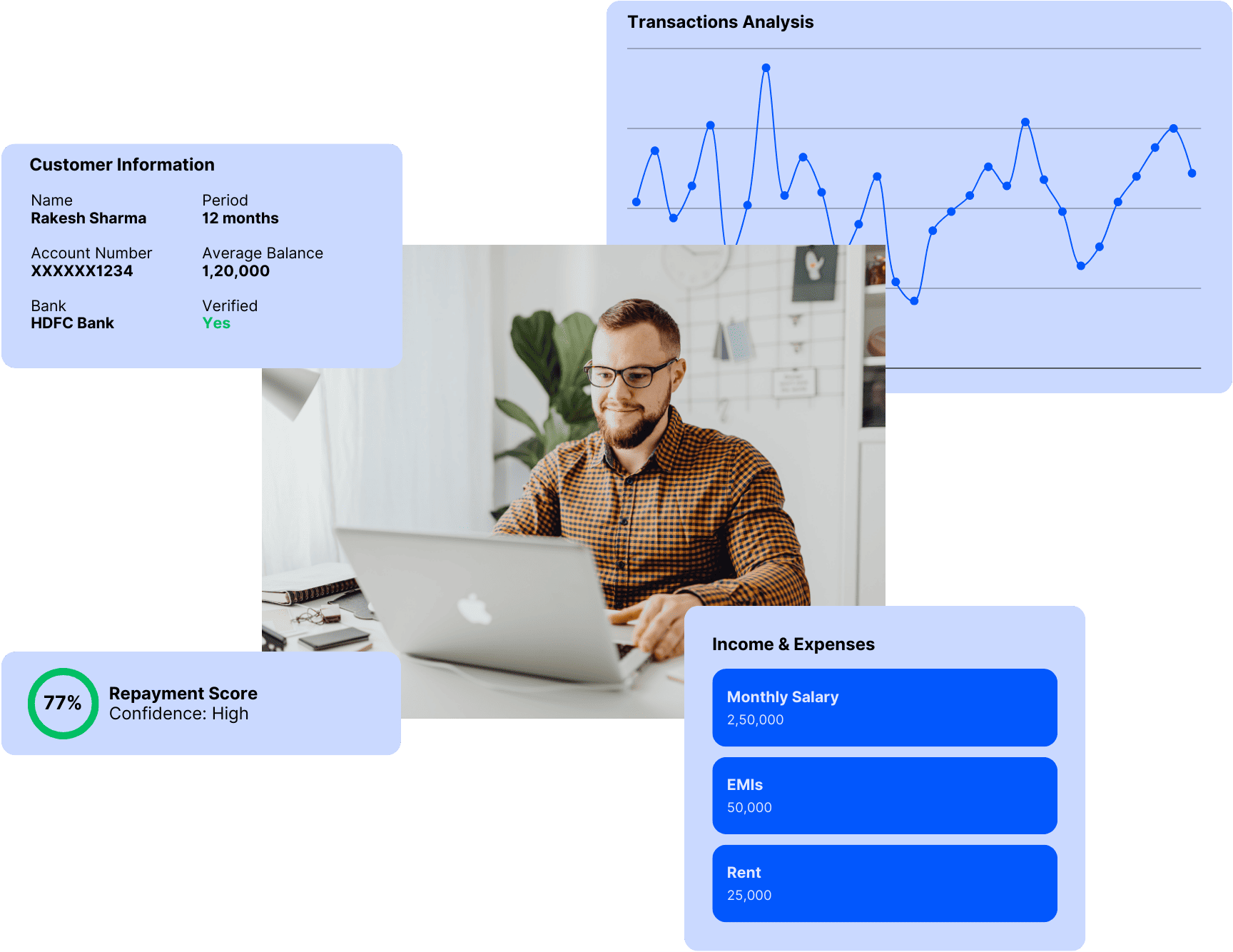
- Cash flow data (bank statements, transaction patterns)
- Behavioral signals (repayment trends, business consistency)
This layered approach provides a far more accurate picture of business health.
From Documents to Decision Intelligence
At the heart of this shift is a simple idea: Documents, in their raw form, are not decision-ready. A bank statement is just a collection of transactions. A GST return is just a compliance document. Individually, they offer limited insight. Together - and when properly structured - they tell a much richer story.
This is where technology is starting to play a critical role. By transforming unstructured documents into structured, analyzable data, it becomes possible to:
- Normalize financial inputs across formats
- Identify patterns and anomalies in cash flows
- Surface signals that are not visible in static reports
In other words, the focus shifts from reading documents to understanding financial behaviour.
Why This Matters More Than Ever
In markets like India, where MSME lending is both high-volume and high-variance, these gaps become even more pronounced. Two businesses with similar financial statements can have completely different risk profiles—simply because of how their cash flows behave. Relying only on static reports in such environments introduces a level of uncertainty that is difficult to scale. As lenders look to grow their MSME portfolios, the need is not just faster decisions - but better, more consistent decisions. And that requires moving beyond partial truths.
Decisions Shouldn’t Rely on Partial Truth
Financial statements are not wrong. They’re just incomplete. They provide a snapshot - but not the full motion of a business. And credit, by nature, is about understanding that motion. The direction, the consistency, the underlying behavior. As underwriting evolves, the institutions that will stand out are not the ones with more data - but the ones that can connect the dots more effectively. Because in the end, better decisions don’t come from more documents. They come from better interpretation.
Closing Thought
The future of underwriting is not about replacing financial statements. It’s about putting them in the right context - by connecting them with real-world financial signals and uncovering what lies beneath the numbers.
This is exactly where GLIB is focused. By transforming financial documents into structured, decision-ready intelligence, GLIB enables lenders to move beyond static analysis and toward a more complete, behavior-driven understanding of risk.