In today’s digital lending ecosystem, speed and accuracy are no longer optional — they are expected.
Whether it’s a personal loan, MSME credit, or BNPL product, customers want instant decisions, while lenders need strong risk control.
This is where credit decisioning comes in.
What is Credit Decisioning?
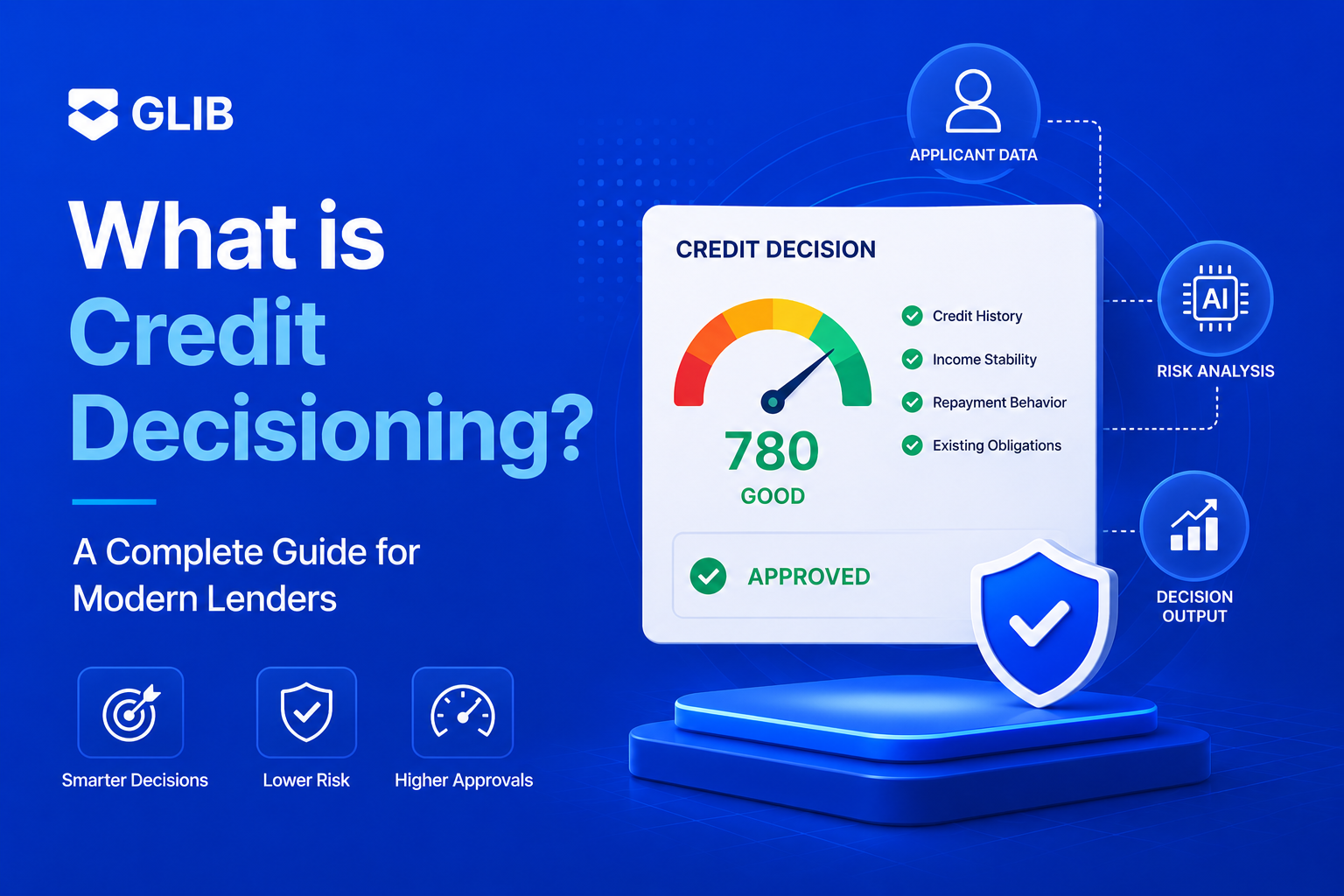
Credit decisioning is the process by which financial institutions evaluate a borrower’s creditworthiness and decide:
- Whether to approve or reject a loan
- How much credit to offer
- What terms (interest rate, tenure, limits) to apply
At its core, it balances risk and growth — ensuring lenders minimize defaults while enabling access to credit.
What is a Credit Decisioning Engine?
A credit decisioning engine is a software platform that automates this process.
It:
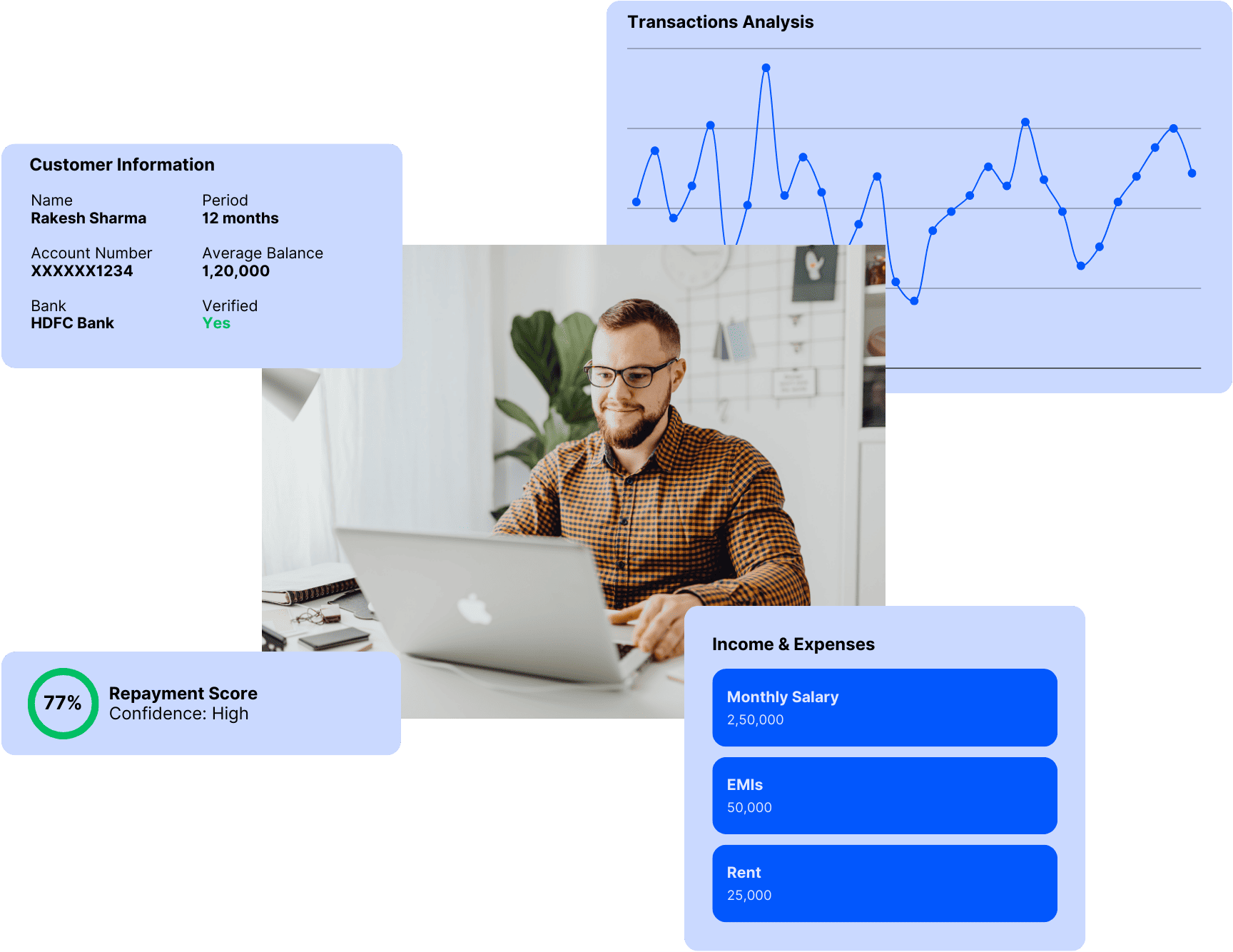
- Collects data from multiple sources
- Applies business rules and scoring models
- Generates real-time decisions (approve, decline, or review)
Modern systems combine rules, analytics, and AI to deliver faster and more consistent decisions across the lending lifecycle.
Why Credit Decisioning Matters Today
Traditional underwriting relied on:
- Manual reviews
- Static documents
- Limited data sources
This led to:
- Long turnaround times
- Inconsistent decisions
- Missed lending opportunities
Today, automated credit decisioning enables:
- ⚡ Instant loan approvals
- 🎯 Better risk assessment
- 📈 Higher conversion rates
- ⚙️ Operational efficiency
It transforms lending from a manual process into a real-time decision system.
How Credit Decisioning Works (Step-by-Step)
A modern credit decisioning workflow follows a structured process.
1. Data Collection
The system gathers borrower data from:
- Credit bureaus (CIBIL, Experian, etc.)
- Bank statements and financial data
- Income, employment, and identity records
- Alternative data (utilities, digital footprints)
A decision is only as strong as the data behind it.
2. Data Analysis & Risk Assessment
The engine evaluates:
- Credit score and history
- Income and repayment capacity
- Existing liabilities
- Behavioral patterns
Many systems use frameworks like the 5Cs of credit:
- Character
- Capacity
- Capital
- Collateral
- Conditions
3. Rules & Policy Execution
Business rules are applied:
- Eligibility criteria
- Risk thresholds
- Regulatory checks
For example:
- If credit score > X → approve
- If DTI > Y → decline
These rules ensure consistency and compliance.
4. Decisioning & Output
The system produces:
- Approval
- Rejection
- Referral for manual review
This decision can be delivered in seconds, without human intervention in most cases.
5. Continuous Learning (AI-Driven Systems)
Modern engines improve over time by:
- Learning from past decisions
- Refining risk models
- Adapting to new borrower patterns
This turns decisioning into a dynamic intelligence system, not a static process.
Key Components of a Credit Decisioning Engine
A high-performance credit decisioning platform typically includes:
1. Data Integration Layer
- Connects to internal and external data sources
- Aggregates borrower information in real time
2. Rules Engine
- Defines eligibility and risk policies
- Ensures regulatory compliance
3. Scoring Engine
- Calculates credit risk using statistical or AI models
4. Decision Engine
- Combines rules + scores to produce final decisions
These components work together to enable automated, scalable lending decisions.
Real-World Use Cases of Credit Decisioning
1. Digital Lending
- Instant loan approvals for personal loans and BNPL
- Reduced onboarding time from days to minutes
2. MSME Lending
- Evaluating borrowers with limited credit history
- Using cashflow and alternative data for decisioning
3. Credit Cards & Consumer Finance
- Real-time eligibility checks
- Personalized credit limits and offers
4. Trade Finance
- Faster approval of complex transactions
- Risk evaluation across multiple documents
Benefits of Credit Decisioning Systems
For Lenders
- Faster decision-making
- Reduced operational costs
- Improved risk control
- Scalable lending operations
For Customers
- Instant approvals
- Better transparency
- Personalized loan offers
Traditional vs Modern Credit Decisioning
| Traditional Approach | Modern Decisioning |
|---|---|
| Manual review | Automated decisions |
| Static data | Real-time data |
| Limited inputs | Multi-source data |
| Slow approvals | Instant approvals |
| Human bias | Consistent logic |
The Future of Credit Decisioning
Credit decisioning is evolving beyond rule-based automation.
The next phase includes:
- AI-driven underwriting
- Real-time cashflow-based decisioning
- Explainable decision systems
- Embedded finance integrations
The focus is shifting from:
“Can we approve this borrower?”
to
“Can we understand this borrower in real time?”
Final Thoughts
Credit decisioning sits at the heart of modern lending.
It determines:
- Who gets credit
- How much
- At what risk
As lending becomes more digital and data-driven, decisioning engines are no longer just backend systems.
They are the core intelligence layer powering every credit decision.
👉 Want to modernize your lending workflows with AI-powered credit decisioning and financial intelligence?