The same fraud costs a lender very different amounts depending on when it is found.
Identified during underwriting, a suspected fraud case can be investigated before the loan is disbursed. If it comes to light after disbursement, the lender may have to deal with recovery efforts, potential financial losses and additional reporting.
The initial warning signs may already be present in the bank statement. The difference is whether anyone examines them closely enough, early enough.
Why Fraud Is Easy to Miss During Underwriting
Fraud signals rarely look like fraud when you see them one at a time.
A large deposit can be a bonus. A cash deposit can be normal for a trader. A cheque return can be a timing issue. An analyst reading a statement in order sees a sequence of transactions, and each one has a reasonable explanation.
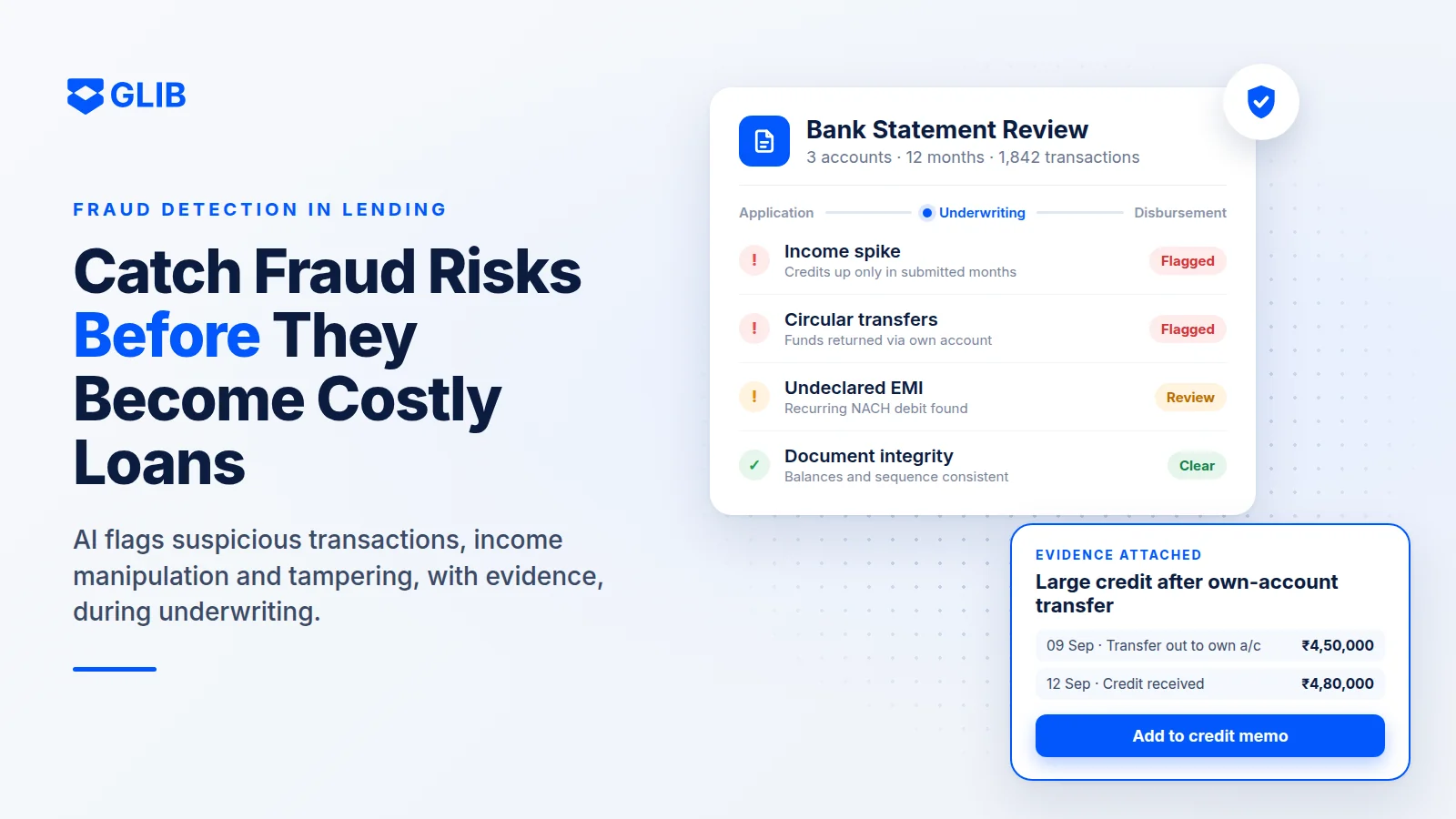
Looking at these transactions together makes the issue much clearer. The large deposit showed up just days after a transfer from another one of the borrower’s own accounts. Monthly deposits only spiked during the specific months submitted for the application. On top of that, an undeclared loan payment is regularly going out.
Spotting that combination means comparing behavior across months and accounts, which is slow to do by hand. It is usually the first thing to go when a file has to move today.
What Fraud Detection in Bank Statements Looks For
Automated analysis structures every transaction first, then looks for behavior that does not fit the rest of the account.
- Whether income behaves like income. Salary credits and business receipts follow a pattern. Credits arriving at irregular intervals, coming from unrelated sources or appearing only in the months submitted with the application may need closer examination.
- Whether funds are simply circulating between accounts. Funds that leave one account and return through another make cash flow look stronger than it is, and can lead to the same money being counted twice.
- Whether financial obligations align with what was declared. Recurring EMIs and NACH debits that were never declared change the repayment picture.
- Payment behavior over time. A single cheque return means little, but a pattern of returns across months means something else.
- The document itself. Inconsistencies in balances, transaction order or file structure may indicate that the statement was altered before submission.
A Flag on Its Own Does Not Help the Analyst
A risk score with no explanation behind it creates work rather than removing it. The analyst still has to open the statement and work out what the system reacted to.
A useful flag should arrive with the transactions that produced it and an explanation of how they differ from the rest of the account. The analyst can then decide whether to ask the borrower for an explanation, escalate the file, or move on.
It also makes the finding usable later. When fraud checks produce evidence rather than scores, that evidence can travel into the credit note instead of being written out again.
Where Credit Memo Automation Software Fits
Most fraud findings have to reach the credit memo in some form, and that step is usually manual.
Credit memo automation software can help bring financial findings into a structured credit assessment. Instead of manually compiling information from different documents, analysts can review an organized draft, add relevant context and approve the final memo.
It also ensures the assessment is kept organized. If someone asks later why a file was approved despite a flagged transaction, the reasoning and supporting evidence should be available for review.
GLIB Bank Statement Analyzer
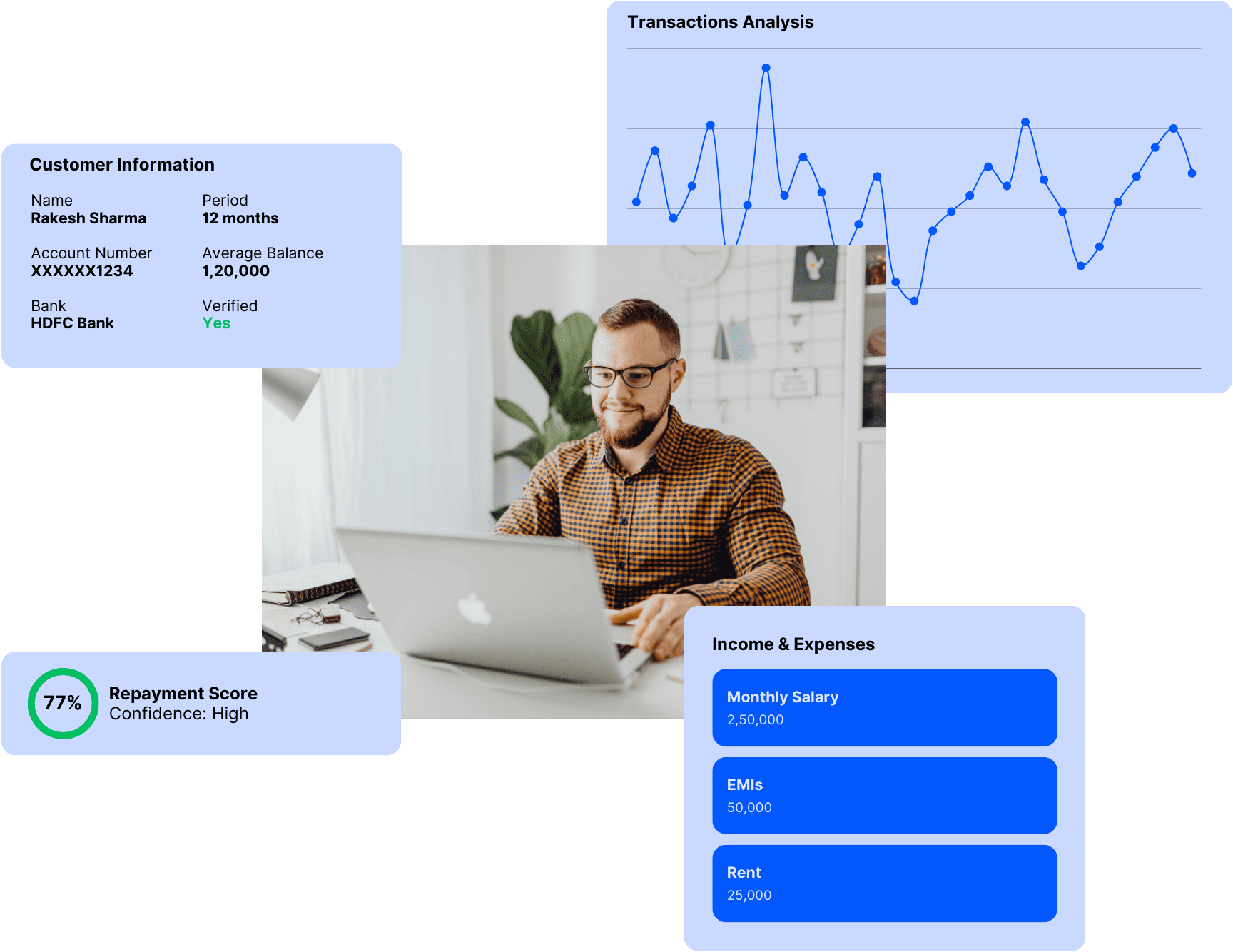
GLIB’s Bank Statement Analyzer converts bank statements into structured transaction data and analyses activity across multiple accounts. Its in-built OCR extracts information from scanned statements, passbooks, canceled cheques and images captured on smartphones. Embedded Account Aggregator integrations also allow lenders to collect financial information through secure, consent-driven journeys.
The platform identifies early warning signals such as document tampering, fraudulent income infusion and cheque bounces. It also supports income verification, spend analysis and cash flow analysis. Smart reconciliation helps lenders compare bank statement information with credit bureau reports, payslips, ITR and GST returns. Data sufficiency and vintage checks help establish whether the submitted information meets the lender’s requirements.
GLIB also offers customizable reports and templates for retail, SME, home, auto and more than 20 other loan products. Reports can be delivered through APIs in Excel, JSON or XML formats.
GLIB has processed over 10 million documents and saved more than 1.2 million man-hours.
Earlier Detection, Better Lending Decisions
Automated analysis does not determine whether a borrower is committing fraud. It helps narrow down the files that need closer attention and brings supporting transactions to the reviewer’s attention.
This gives lenders an opportunity to investigate potential risks before disbursement, when addressing a suspicious application may be less costly than dealing with a problem after the loan has been issued.
Frequently Asked Questions
What is fraud detection in bank statements?
It involves reviewing individual transactions in a borrower’s bank statement to spot signs of misrepresentation, such as unusual credits before an application, circular transfers, undeclared obligations or signs that the document was edited.
Can AI confirm that a borrower is fraudulent?
No. It identifies patterns that need investigation and shows the transactions behind each one. The decision stays with the credit officer.
How does fraud detection connect to the credit memo?
When flags are produced with supporting evidence, credit memo automation software can help bring relevant findings into a structured credit assessment, keeping the observations and their supporting information available for review.
Want to see which files your team would catch earlier?
Book a demo today.