Banks have been automating document work for about two decades, and the word automation has meant something different at nearly every stage.
Agentic AI is the most recent of those stages. The short definition is software that is given a task rather than a single step, works out the sequence needed to complete it, and hands the result to a person for review.
The longer answer is easier to follow if you look at what came before it.
Three Stages of Banking Automation
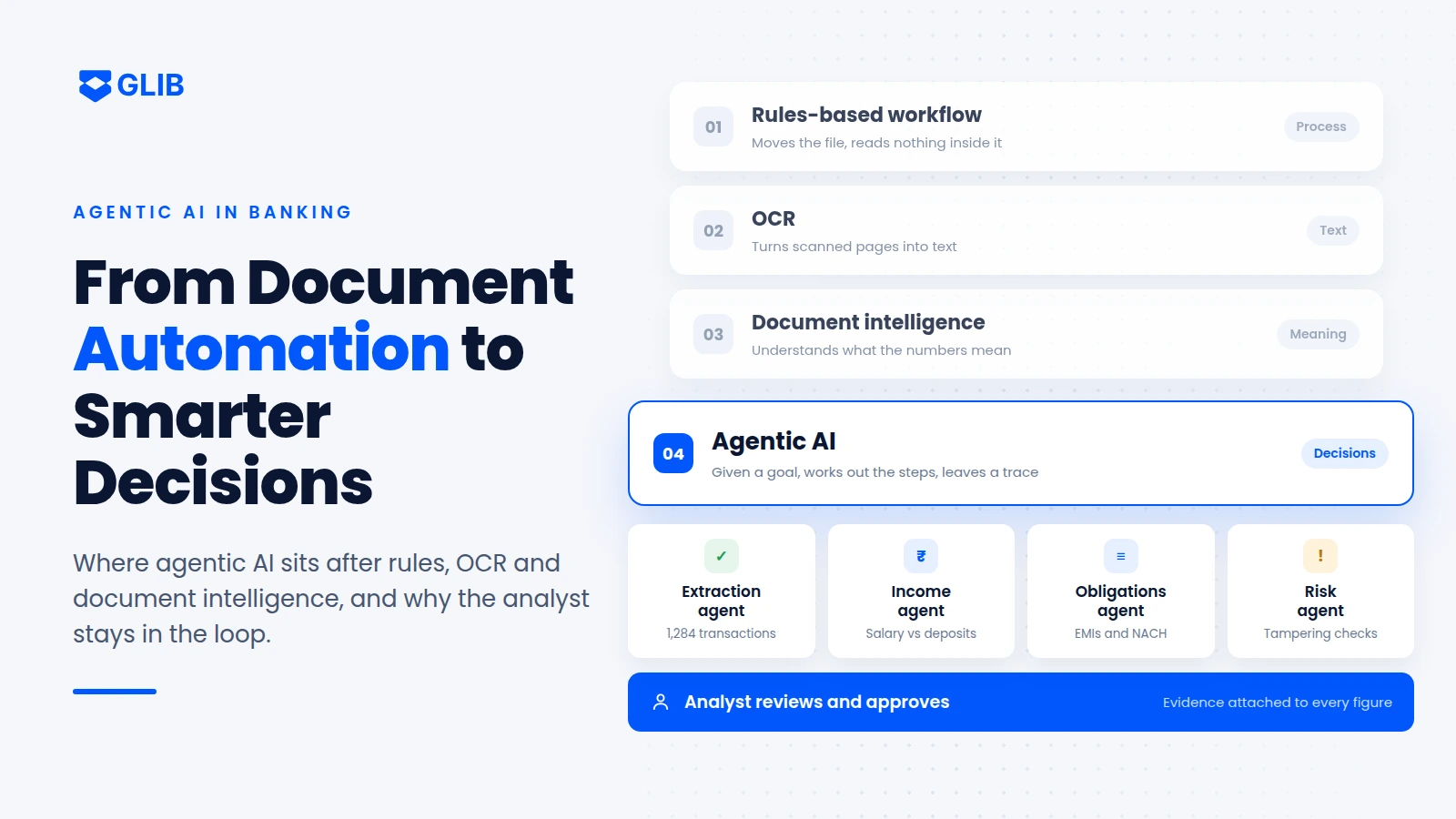
Rules-based workflow automation came first. It moved a file from one queue to the next, sent reminders and applied if-then logic. It managed the process without reading anything inside the documents.
OCR came next. It converted scanned pages into machine-readable text, which removed a lot of typing. But characters on a page are not financial information, and someone still had to interpret what had been pulled out.
Document intelligence was the third step. The system could now understand the information it was reading, not just extract the text. It could recognize a salary deposit from other credits, identify finance expenses, and connect documents belonging to the same person or company.
Each stage was useful, and each stopped in the same place. The system prepared information, and a person did everything after that, including moving the output into the next tool.
What Makes AI Agentic
Three things separate an agent from the stages above.
- It works from a goal rather than a step. Given a task such as verifying a borrower’s income, an agent determines what to read and which checks to run, rather than waiting to be told each time.
- It acts across documents and systems. An agent can compare a bank statement against a payslip, check a bureau report and write its output into the lending system, instead of stopping at the edge of one document.
- It records what it did. Each action leaves a trace of what was read, what was calculated and what was flagged.
Banks rarely use a single agent. Several work on the same file, each handling one part, with results passed between them.
What Agentic AI for Lending Looks Like on One File
Consider a retail loan application with six months of bank statements from two banks.
First, the system collects the statements, either uploaded by the borrower or fetched through an Account Aggregator. It then extracts the transactions into a structured format. An income agent identifies salary credits and separates them from other deposits. Another check identifies existing EMIs. A risk check looks for altered documents, unusual credits, and missed payments. Finally, the findings are put together into a report for the credit team.
Preparation that used to take days arrives as a structured file. The credit officer still makes the decision, but starts from analysis rather than raw documents.
The Same Pattern Outside Lending
AI workflows work anywhere paperwork guides a decision.
In KYC, agents can compare identity details across documents. For insurance claims, they can check submitted bills and reports against policy terms. In accounts payable, they can match invoices with purchase orders before payment.
The documents change, but the pattern does not.
What Agentic AI Should Not Be Left to Do Alone
Language models can produce confident output that is wrong, which matters when the output is an income figure or a financial ratio.
This is why human review belongs in the design rather than at the end of it. An analyst should be able to see the source behind every figure, correct what needs correcting and approve the result before it becomes part of a decision. Smaller, purpose-trained models also tend to be more dependable than large general-purpose ones for structured financial work.
GLIB Bank Statement Analyzer
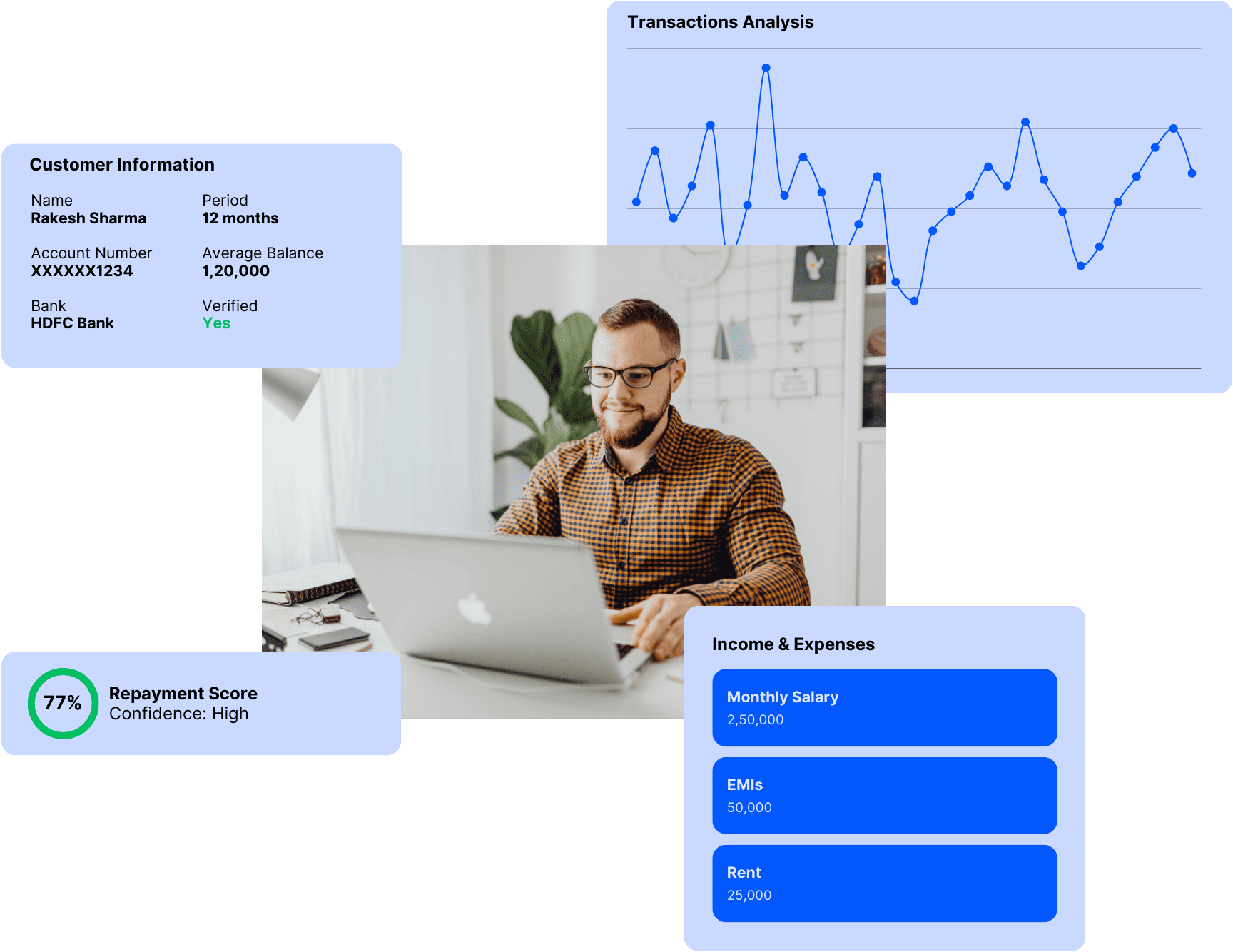
GLIB’s Bank Statement Analyzer applies this approach to one of the most document-heavy steps in lending. It converts statements from different banks and formats into structured transaction data and analyses activity across multiple accounts. Its built-in OCR extracts information from e-statements, scanned statements, passbooks, canceled cheques and images captured on smartphones. Embedded Account Aggregator integrations allow lenders to collect financial information through secure, consent-driven journeys.
The platform supports income verification, spend analysis and cash flow analysis, and identifies early warning signals such as document tampering, fraudulent income infusion and cheque bounces. Smart reconciliation helps lenders compare statement information with credit bureau reports, payslips, ITR and GST returns.
Human-in-the-loop controls keep analysts in the review path, and reports can be customized or delivered through APIs in Excel, JSON, or XML so results move into existing systems.
GLIB has processed over 10 million documents and saved more than 1.2 million man-hours.
From Preparing Files to Assessing Them
The real value of agentic AI in banking is not just the work it automates. It is the time it gives analysts to focus on decisions. When documents are organized, checks are completed, and evidence is easy to review, analysts can spend more time on the judgment that requires their expertise and experience.
Frequently Asked Questions
What is agentic AI in banking?
It is AI that is given a task rather than a single step, works out the sequence of actions needed to complete it, and passes the result to a person for review. Several agents usually handle different parts of one file.
How is agentic AI different from OCR?
OCR converts a scanned document into readable text. Agentic AI uses that text, interprets what it means, runs the relevant checks across documents and produces an output the credit team can act on.
Does agentic AI replace bank staff?
No. It handles the preparation and the repetitive checks. Decisions, exceptions, and final approvals stay with the people accountable for them.
Want to see what an agentic workflow looks like on your own files?
Book a demo today.